
Fraud Scanner
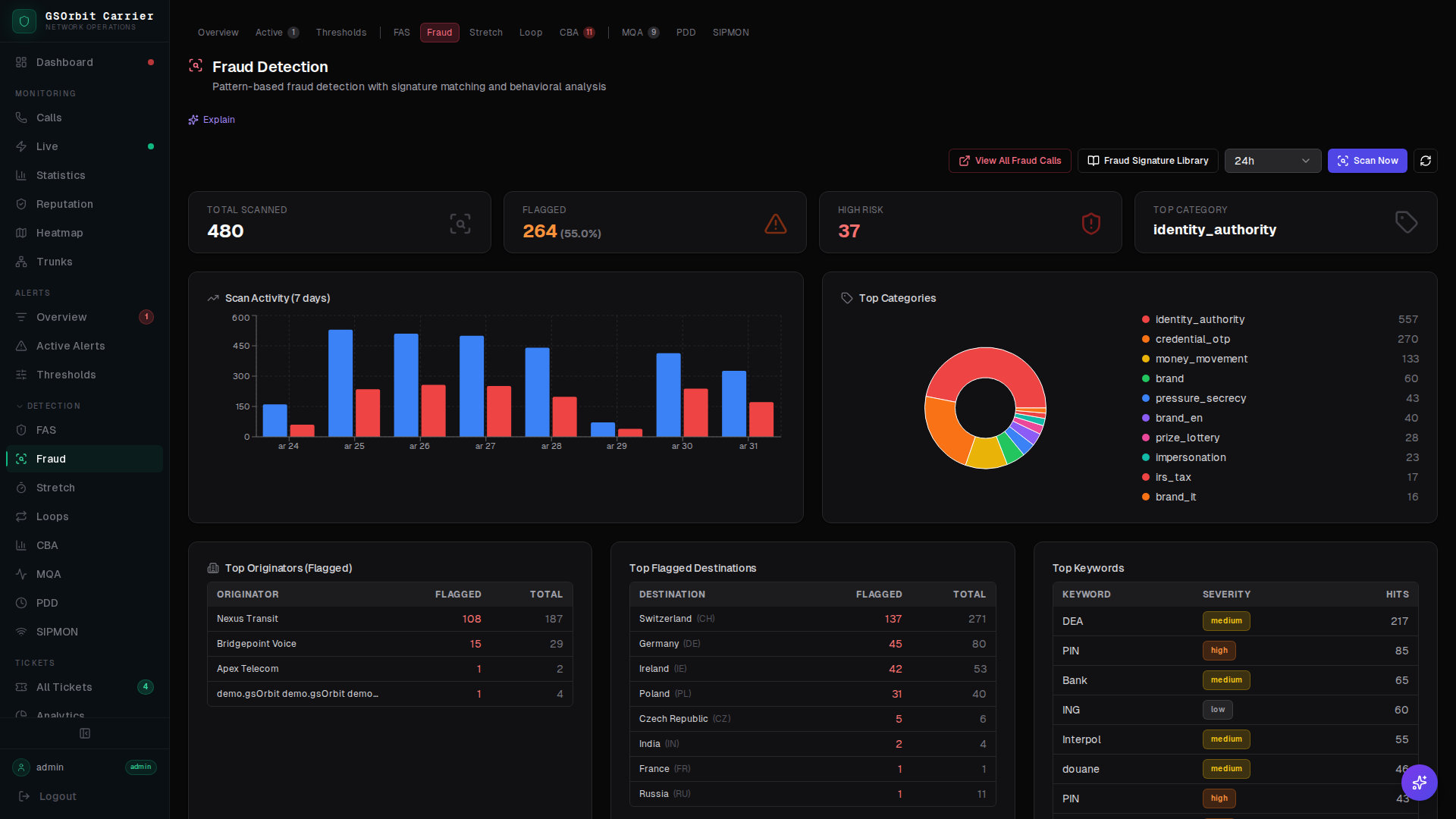
Fraud farms, synthetic audio, and call routing fraud leave audio signatures that CDR data alone cannot reveal. GSNOC's Fraud Scanner analyzes every call's audio content to produce a fraud score your team can act on.
The Fraud Scanner Problem
Modern VoIP fraud is increasingly sophisticated. Fraud farms generate plausible-looking CDRs with audio content designed to evade simple duration checks. Only audio analysis exposes the underlying fraud pattern.
- Fraud farms generating revenue by routing calls to synthetic answer points that never involve a human
- Synthetic audio designed to pass basic duration checks while the call was never genuinely answered
- Call routing fraud where calls are looped or diverted in ways that generate billing without delivering service
- Pattern-based fraud that evades per-call thresholds but is visible in aggregate audio analysis
How Fraud Scanner Works
Four analysis layers combine to produce a per-call fraud score that prioritizes the most suspicious calls for review.
Identifies calls with extended silence segments that indicate no genuine conversation occurred despite being billed as answered.
Analyzes audio content for artificial noise, comfort noise injection, and non-speech audio patterns associated with fraud endpoints.
Matches audio fingerprints against known fraud patterns including synthetic ring-back, recorded greetings used to trigger FAS, and loop-back audio.
Combines silence ratio, noise classification, pattern match confidence, and carrier history into a single fraud score (0–100) per call.
Why GSNOC Fraud Scanner Is Different
- Per-call audio analysis goes beyond CDR statistics to examine the actual content of every captured call
- Multi-pattern detection catches fraud that evades any single detection method
- Fraud scores enable prioritization — your team reviews the highest-risk calls first rather than chasing every anomaly
Key Metrics
Composite per-call fraud likelihood score combining all audio analysis signals
Measure of audio content genuineness — low scores indicate synthetic or absent speech
Whether the call's audio matched one or more known fraud audio patterns
Percentage of calls from a carrier scoring above the fraud threshold over a rolling window